In the Holly Meadows community of Tucker County, WV along the Cheat River lies a farm where brothers, Harry L., David E., and Joseph F. Long spent their early years. Harry, the oldest, graduated from Parsons High School in 1940 and went on to serve in the United States Army Combat Engineers in the South Pacific during World War II. In combat against the Japanese, Harry was awarded three Battle Stars during the Leyte and Okinawa campaigns. A ruggedly handsome six and one-half foot tall, Harry’s appearance was much like the ‘Marlboro Man’, identified in so many commercials. Dave often joked that when in Harry’s presence, he feared no one, no matter what the circumstances.
Following high school graduation from Parsons in 1944, Dave attended Ohio State University on an early enlistment in the US Army Air Forces Specialized Training Program. He later served in the 20th Air Force in the South Pacific. After the end of the war, Dave attended Potomac State College and while there acquired his private pilot’s license at the new Keyser Airport under veteran instructor Herb Wentz. He attained a degree in Mechanical Engineering in 1951 at West Virginia University and spent a career in that field at Westvaco’s Luke Mill. With his keen interest in local aviation, Dave served as a member of the Potomac Highlands Airport Authority and has been active in the Alleghany Flying Club at the Greater Cumberland Regional Airport. Dave holds a Commercial Pilot’s license with Instrument, Glider and Seaplane ratings, and, as active member of the Cumberland Soaring Group, attained the coveted Silver C Soaring Badge.
On his seventieth birthday, Dave, while flying his Aeronca Champion, had his first forced dead stick landing due to engine failure. He successfully placed the aircraft down in a farmer’s field near Burlington, WV without further damage. He has owned and flown a variety of aircraft including a Mooney Mite, Aeronca Champion, Aeronca Chief, Cessna 182 Skylane, Great Lakes Trainer, and a vintage Schweizer TG-2 glider. While at the Oshkosh, Wisconsin, Experimental Aircraft Association Convention Fly-In, Dave’s Aeronca Chief was an award winner as the best Aeronca Chief in both 1978 and in 1998.
Joe, the younger brother, followed his siblings to Parsons High School and graduated from West Virginia University in 1955. While there he learned to fly in an Aeronca Champion at the college’s flight school. As a life long prankster, Joe buzzed his school teacher mother’s country school house, much to her irritation, but to the delight of her students. He graduated under the ROTC program as a 2nd Lieutenant and entered Air Force pilot training. His primary training was at the renowned Bevo Howard’s Hawthorne Aviation School where he flew the T-34 ‘Mentor”. Joe, along with his classmates, felt they were then pretty hot pilots. Bevo Howard assembled the group and had them witness his professional air show acrobatic routine in a Bucker Jungmeister, thereby humbling the young pilots and affirming that they had a lot to learn. Joe continued his flight training in the North America T-28 ‘Trojan’ and the Lockheed T-33 ‘Shooting Star’, then received his Air Force wings at Big Spring, Texas in 1956.
Joe Long’s initial assignment was to New Castle Air Force Base in Delaware flying the all weather interceptor jet fighter, the Lockheed F-94 ’Starfire’. The mission was to guard the borders of the United States from aerial intruders. Missions were flown in all types of weather and Joe related that the only electronic gear abroad the aircraft was a crude automatic direction finder receiver and a single communications radio. He once penetrated a thunderstorm hidden by clouds so violent that the F-94 fighter was damaged by the strong gusts to the point that it was junked after landing. Zero visibility approaches and landings were sometimes accomplished with only the aid of instruments and the use of Ground Controlled Approach radar. A ground controller talked to the pilot constantly, offering heading and altitude changes throughout the approach and landing. This was tough flight duty for a new pilot.
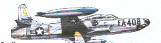
Lockheed F-94 Starfire.
With his radar observer (RO) as the back seat operator, Joe would be assigned random aircraft and would often not have met the crew chief who maintained that craft. One of these crew chiefs had a reputation of being irritable and surly, and Joe and his RO decided to pull a stunt on this individual. Before approaching the aircraft they changed headgear and thereby assumed the other’s identity. Joe, with headgear of the RO, states loud and clear, “You know, I bet I could fly this airplane”. The RO, with Joe’s piloting headgear responds, “I think you could too, since you have handled the stick well from the back seat. You go ahead and get in the front and it is your aircraft to fly!” They then board the F-94 with the surly crew chief thinking an unauthorized individual was about to fly the aircraft that he maintained. Joe purposely made some miscues in the starting procedures and displayed abrupt movements as he taxied out from the ramp. The crew chief is now thoroughly convinced that someone who should not be in the front seat of ‘his’ aircraft is about to fly that craft. Rapidly proceeding to the control tower, the crew chief explained to the tower operator that an unauthorized RO is piloting that plane. Prior to take-off the tower controller requested identification of the pilot in control of the ‘Starfire’. Joe then responds in a professional manner that the pilot is Captain Joseph F. Long. Completing their flight, Joe and the RO returned to the parking slot and routinely discussed the flight. The highly irritated crew chief would only listen but would not speak to this crazy crew.
At Paine Air Force Base, Washington, Joe continued to fly in an all weather interceptor squadron, flying the Northrop F-89 ‘Scorpion’. On a Monday, Joe was called to his commanding officer’s office and was asked if he knew anything about an F-89 that had been flown under the nearby Tacoma Narrows Bridge on the preceding Sunday. As Joe was attempting to reply, the commander produced a photo taken by an individual from the bridge clearly displaying the tail number of an F-89 that had been assigned to Captain Long that day. The chewing out he received apparently did not hinder Joe’s career. While at Paine Field Joe was able to continue his avid interest in hunting and fishing in the northwest.
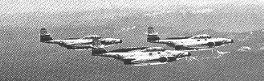
A flight of three Northrop F-89 Scorpions
Next assigned to Ladd AFB in Fairbanks, Alaska, Joe continued to fly the F-89 jet fighter. Russian fighters and reconnaissance planes were often encountered over the Bering Sea and the Aleutian and Diomede Islands. This was extremely cold climate, with low ceilings, white outs, and icing problems. Survival was questionable in case of an emergency exit from an aircraft. Joe became known for his pursuit of outdoor activities and as a result was given command of the US Air Force Rest and Recreational hunting and fishing camp for military personnel. Enjoying life to the fullest, Joe was ideally suited for this position. He was a great story teller and entertained military folks of all ranks as well as politicians and entertainers who visited the camp. All received the VIP treatment and greatly enjoyed their host.
During the Kennedy administration, Joe was assigned to Otis AFB at Cape Cod, Massachusetts. There he flew the four-engine Lockheed EC-121 Super Constellation AWAC aircraft used as part of the early warning system in place at the time. Missions lasting from ten to twelve hours were flown in holding type patterns. Temperamental engine problems resulted in many landings where less than the four engines were operating. On one mission, a fire in one engine caused it to drop off the wing into the Atlantic Ocean.
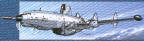
Lockheed EC-121 Super Constellation.
Joe’s next duty was totally different and involved flying the unique Lockheed U-2 ‘Dragonfly’ spy plane. The U-2 is a single-seat, single engine, temperamental reconnaissance aircraft that requires the pilot to wear a full pressure suit due to its operational flight altitudes of over 70,000 feet. One hour of breathing pure oxygen prior to take-off is a prerequisite to prevent decompression sickness at the high altitudes. There is also an extremely small airspeed range between a stalled aircraft and Mach buffet that has to be maintained. Exceeding the set Mach speed could result in structural damage in the relatively fragile airframe of the U-2. Speed control is also critical during the landing phase for the 40,000 pound aircraft. It is similar to a sailplane in that it has only a tandem landing gear with outriggers.
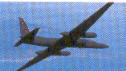
Lockheed U-2 Dragonfly.
Extreme caution has to be paid to surface winds at all times whether the aircraft is in motion or at rest. While at this assignment Joe also flew the super hot Lockheed F-104 ‘Starfighter’. This sleek aircraft is more akin to a missile than an aircraft, with its short stubby wings. High altitude missions were also flown by the F-104 that came as close as to a space machine as an aircraft could get. These activities and missions flown by Joe Long were highly classified and were never discussed by him in any detail. Joe also flew the Douglas C-47 ‘Skytrain’ (a version of the venerable DC-3) during this period.
On a Saturday afternoon in the 1970’s several of the Cumberland Soaring Groups’ sailplanes were airborne enjoying great soaring conditions over Knobley Mountain. The airborne aviators, all equipped with hand held radios, overheard a call on the soaring group’s office radio. The call was from a pilot identifying himself as over Deep Creek Lake eastbound toward Cumberland and Martinsburg, and asked if the CSG would like a low pass down runway 6 at the Cumberland Airport in his F-104. Dave Long, a member of the CSG on the ground at the club’s hangar, naturally replied in the affirmative. All the soaring pilots were on keen alert from this request. The pilot of the F-104 inquired if traffic to the west was clear and that he was setting up for a buzz job down RW 6. Dave Long recognized the voice as his brother, Joe, still a member of the Air Force with F-104 fighter experience. Joe advised that he was passing over Westernport and would fly through the cut in Knobley Mountain west of the airport, make his pass shortly, and would proceed to his destination at Martinsburg, WV. In short order Joe advised that he was coming through the mountain pass, and Dave assured him that all traffic was clear for his pass. Dave then advised over the radio that the high speed pass was a beautiful sight to behold. The aloft sailplane pilots suspected something was amiss due to the clear communication at their altitude of over 6,000 feet and that none of the airborne soarers had visibly observed the F-104. One prominent sailplane pilot queried another of his cohorts, “George, did you see him?”
The above scenario was a total hoax. What had really happened was that Dave and Joe Long were alone on the ground at the CSG and had simply been handing the microphone back and forth to each other making up the conversations as they duped the airborne soaring aviators. A hearty laugh by the Long boys, acting as court jesters, followed as they enjoyed a can of beer, fully aware of the duping handed out to their aviating friends. The remark, “George, did you see him?” was repeated many times in recalling this humorous incident.
The Vietnam War saw Joe flying Lockheed EC-121 Super Constellations with a large rotating radar disc attached to the fuselage. These aircraft were used as part of the early warning system to detect approaching hostile North Vietnam aircraft, with flights lasting several hours. Joe knew how to lead and develop esprit de corps within his organization. As an aircraft commander, he purchased special flamboyant hats from Australia for his fifteen crew members. One of these hats was later given to an impressive eleven year old nephew, Tim Long. Joe allowed his crew to adopt a Mongoose animal as their mascot, which proceeded to get loose during one mission, causing much confusion among the crew members. Following his time in Vietnam, Joe flew F-101 ‘Voodoo’ jet fighters at Eglin AFB in Florida and at Sacramento, California.
Joe Long left Air Force duty and was then employed by Pan American Airways flying from San Francisco to Japan, Hong Kong, and Australia in Boeing 707 four-engine airline aircraft. He was later transferred by Pan Am to Miami, Florida. In addition to flights from Miami he flew from John F. Kennedy Airport in New York to the Bahamas, Puerto Rico, and other Central America locations. Joe related that the Boeing 727 was used on these flights and that they always landed on a small airport on an isolated island, being challenged operating from the small runway. He found out the reason no passengers ever deplaned or boarded the aircraft at this site. Mr. Juan Trippe, an historical and pioneering figure in airline travel who opened up South America for aerial routes, was living there in retirement. He was the founder and perennial president of Pan American Airways from its beginning in the 1920’s. The stop was simply to deliver the daily Wall Street Journal newspaper to Mr. Trippe.
Later Joe was furloughed by Pan American and was instructing and maintaining aircraft. During this time Joe visited Cumberland and offered flight instruction to his brother, Dave. Dave considered Joe to be a superb flight instructor, always taking at least an hour for pre-flight briefing and planning, performing the flight as planned, and then held a thorough post-flight debriefing that lasted at least 30 minutes.
Joe acquired a Republic ‘Seabee’ amphibian aircraft which he flew to the Cumberland area for the summer. At various times, Joe flew the Seabee to local lakes to instruct his brother, Dave, or his nephew, Tim, in water landings. Tim was flying the left seat on a hot day take-off from the Mt. Storm Lake of the VEPCO power company. Due to a wind from the south, Joe thought it best to take-off upstream when the old marginal 215 hp Franklin engine began to lose power as they barely cleared the shore line. After moving the throw over control wheel to right side of the aircraft, Joe was able to fly to lower ground and land at Miller Field with the failing power plant. After repairing the Franklin engine, Joe decided to walk to the Piper Tomahawk crash site described previously in this chapter.
Joe Long loved his West Virginia roots, especially Mineral and Tucker Counties. During his Air Force career and airline flying, he was the epitome of aviation professionalism in appearance and action, but when in his favorite area he dressed as casually as any native West Virginian. Wearing his torn bib overalls, picking up his disfigured straw hat and with a toothpick or straw to chew on, he approached the crashed Tomahawk, which was in the process of being dismantled by mechanics from the Alphin Aircraft Company from Hagerstown, MD. Joe starts to irritate the busy mechanics by asking, “Is that there thing one of them he-li-o-cop-ters?” In an abrupt answer the response was, “No, it is an airplane”. Joe kept talking about he-li-o-cop-ters flying over his house and how noisy they were and that he might have to get his gun and shoot them if they continued. He kept up his prodding and annoying manner with the mechanics, who were only interested in getting their job completed. This was finally accomplished, but the mechanics could not get over this pest from the hills of West Virginia and later expressed pleasure in relaying the story of the hick from the hills to others. Years later, Bill Pancake, with an aircraft based at Miller Field and who was familiar with the antics of Joe Long, happened to be at the Alphin firm in Hagerstown. These same mechanics repeated the story of the redneck hillbilly they met at the Tomahawk site. After intently listening, Bill explained that they had been hoodwinked by a professional airline captain who was the chief flight engineer for all of Saudi Arabian Airlines at the time. They could not believe their gullibility but after receiving other confirmation, realized they had been had by an expert jokester.
Joe and Dave planned the ultimate combination flying and fishing trip of a lifetime in the Seabee. A lake in Canada was reserved for their exclusive use from Canadian authorities and preparation was undertaken for this adventurous trip. Knowing they were to be heavily loaded they moved the Seabee to Cumberland for departure. As the consummate pilot, Joe weighed each of the many items boarded on the Seabee, careful to assure that the center of gravity limitations was not exceeded. The early morning departure from Cumberland was alike an early flying boat on a long take-off run an extended flight. The author and his son, David, in another aircraft accompanied them for several miles on their journey, taking photos of the heavily loaded Seabee. The flight to their lake destination went smoothly and they had a glorious week fishing in the isolated Canadian wilderness. They then flew to the EAA Oshkosh, Wisconsin, annual Fly-In where they spent several days.
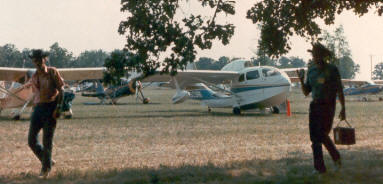
On the left is Joe Long, with Dave Long, as they walk away from the Republic Seabee after their arrival at the Oshkosh Air Show.
On departure their routing was across Lake Michigan with Dave doing the flying. They spent the night at Elkhart, Indiana. Joe always insisted that the pair would alternate each leg of the flight. The intrepid aviators then flew to Mansfield, Ohio where they remained overnight. Dave made the take-off the next morning but during the climb out it was discovered that the landing gear would not retract. It was only partially retracted but to what extent was unknown. Joe requested Dave continue on course as he tried to rectify the problem. Southeast of Mansfield bad weather blocked their forward progress, with Joe insisting that Dave attempt to find a way through the bad weather. After some time of scud running, Dave decided it prudent to reverse course and shortly came to a lake with an adjacent grass landing strip nearby. With an excess of fuel on board, Dave orbited the lake while Joe continued to attempt to solve the landing gear problem. Neither a water landing nor a ground landing option was desirable under the circumstances. Joe decided that desperate actions were needed. While Dave continued to orbit, Joe rummaged in the back of the cabin and retrieved a paddle, which was a required item on the Seabee. Using his hunting knife, he carved a notch in the broad part of the paddle telling Dave that he intended to open the door and while on the outside of the aircraft pull the landing gear forward against the slipstream with the hooked portion of the paddle to lock the gear in the down and locked position. Dave argued against this attempt, but could only watch as Joe opened the door and climbed out on the spray rail to continue his efforts.
The Seabee has a rear mounted engine and Dave realized that this was a truly precarious position for Joe to be in. However, he has to direct his efforts to fly the Seabee, now that his brother was in the slipstream which required full power and delicate handling of the controls. At this point Dave shouts out, “Joe, if you fall off you are going to go through that whirling propeller.” Whereupon, Joe’s loud response was, “Dave, if I fall I WANT to go through the propeller.” Joe was unsuccessful in his efforts due to the strong opposing wind. By now the weather was deteriorating further and it was time for a firm decision. Joe was hesitant to land on the water claiming if an attempted water landing was not smooth the landing gear might be bounced into the down and locked position which would result in a flip over of the craft. However, Joe with his greater experience chose not to take over the controls, insisting that Dave do the flying. He simply stated to Dave, “If you have ever made a smooth water landing, now is the time to do it!” Dave then greased the Seabee onto the water, they do not capsize, and both breathe normally again. A taxi was made to a shallow area where Joe jumped into the water and with great difficulty manually forced the gear into the locked down position. Dave then taxied the aircraft onto the boat ramp and onto the grass landing strip. The Seabee was secured and a return trip to home was made by automobile. A later return was made, the Seabee repaired, and flown back to Miller Field. Joe proclaimed that Dave was the only person in the world to successfully land an amphibian on water with the landing gear in the intermediate position. After these many years, Dave has retained that hook shaped paddle in his den as reminder of the joint venture. That fall Joe, demonstrating his airmanship, flew the Seabee back to Miami with a broken compass, and with no aids other than a watch and sectional maps.
Tim Long, Dave’s son, developed the flying bug early in life, undoubtedly due to the exposure to his father and uncle. At age sixteen, in 1971, Tim learned to fly with Bill Pancake, an experienced flight instructor and nationally known Aeronca expert and guru. His first solo was at Miller Field, the small grass strip owned by Forrest Miller. Tim Long is an example of many aviators who began at the lower end of the ladder and worked his way up to becoming an Airline Transport Pilot and a true professional. He had worked as a line boy for Nicholson Air Service, driving to the Cumberland Airport after school hours at Keyser, and serving the three to eleven shifts. He normally worked seven days a week and spent the earlier hours on Saturday and Sunday getting flight instruction from various pilots including Gary Yutzy, Ellsworth Rosenmerkle, and the famous Dick Roberts. By age eighteen, Tim had attained his commercial pilot’s license with instrument and multi-engine ratings. By 1974 he was flying charter flights as pilot in command, beginning in the Piper 180 Cherokee and progressing to the larger twin-engine Piper Aztec and Navajo aircraft. Tim entered Potomac State College and continued to work for Nicholson. He then went to West Virginia University, graduating with a Civil Engineering degree in 1978, continuing to work during his summer vacation periods.
Tim had no time to celebrate his graduation as he was summoned by his uncle, Joe, to Miami, Florida. Joe, along with many others, had been furloughed from Pan Am as the airline industry attempted to streamline their operations. At the time it was extremely difficult to break into aerial charter or non-scheduled airline flying. However, the Boeing 707 airliner became affordable to those type companies as the big airlines converted to more efficient and profitable aircraft. Tim completed a Flight Engineer’s course concentrating on the Boeing 707 and then continued his aviation education as he served as Joe’s helper performing maintenance on older Douglas DC-3’s, DC-6’s and Douglas DC-7’s. By this time Joe had become more or less a soldier of fortune in aviation and Tim, having a close association with his uncle, joined these activities.
Joes’s wife, Peggy Lou, held a good job, and even though work in Miami was sporadic and casual for Joe and Tim, life was good. Joe had a junky old two door Pontiac they named ‘Ol Green’. The trunk was loaded with mechanic’s tools and the back seat was full of empty beer cans. ‘Ol Green’ was in need of some tender loving care and was in dire need of front tires and other necessities. It had failed to pass the recent Florida state inspection. One afternoon they were stopped by a Florida highway patrolman who noticed the windshield inspection sticker was missing. Joe and Tim were dressed in old raggedy cut off clothing, looking run down on their luck much like ‘Ol Green’. When the officer queried as to why the vehicle had no inspection decal, Joe answered in his slow mournful tone that they had a most difficult time making money doing odd jobs but had saved almost enough to buy a new tire. The officer then asked, “What about all those beer cans in the back seat?” Joe pitifully responded, “Well, officer we spent the whole day hunting cans along the highway and we were on our way to redeem them for money to buy the second tire.” The officer stated, “OK, but then you go straight to the motor vehicle administration to affirm the inspection and get that sticker on the windshield.” After the state trooper departed, Tim drove ‘Ol Green’ away; Joe grinned, had another beer from under the front seat, and then tossed the empty into the back seat.
Joe’s pilot and flight engineers ratings and mechanical ability enabled him to acquire a job with a company that had leased a Boeing 707. The catch was the aircraft was a derelict and had not been flown for several years, plus its location was in Dublin, Ireland. Naturally, Joe took Tim along as his mechanical assistant. Tim’s education helped them read and understand the engineering drawings and technical manuals obtained from the Boeing factory. After several months work, with assistance from mechanics from the Irish Airline, Air Lingus, Joe’s team had practically restored the 707 to new condition. However, the FAA would not issue a license for the aircraft. They required further action and seemed to require the 707 to be just as it came from the factory at Boeing. An exhausting review of all aircraft documents, an official inspection, and a complete flight test program had to be completed. Eventually the 707 received its certificate of airworthiness and was flown to Miami via the great circle route to Iceland, Greenland, New York, and on to Florida.

On the left is Tim Long in front of the Boeing 707 at Tucson, AZ that was previously flown by the Tim and Joe Long. On the right is an aerial shot of a Boeing 707.
The Boeing 707 had revolutionized airline travel from the time it entered service. With its four jet engines mounted under wings swept back 35 degrees it became the classic configuration for years to come. Early on the 707 held a speed record from Seattle to Baltimore at 612 mph. In 1958, Pan Am began service from New York to Paris and set the stage for ocean spanning flights world wide. The 707 was the transport for US Presidents for over 30 years until replaced by the Boeing 747.
The renovated 707 at Miami was piloted by another furloughed airline captain, with Joe serving the important function of flight engineer, and due to a quirk in the Federal Air Regulations, Tim was hired as a co-pilot. After several take-offs and landings with various engine out procedures, Tim was now legally qualified to be a 707 co-pilot for charter operations. He soon acquired plenty of flight experience as both co-pilot and first pilot, even though he did not possess a Boeing 707 type rating. This was an exciting time for a young pilot as he became more proficient and experienced.
The company was soon operating the 707 for charter flights from Miami to Castro’s Cuba, landing at Havana with little publicity. The first flights were to transport political prisoners of Castro to Miami. While at the Havana airport for an eighteen hour period the 707 crew was not allowed to depart the aircraft and were constantly being watched by heavily armed guards. One hundred individuals in poor health and some with broken bones in need of medical attention were allowed to board the aircraft for a flight to freedom. A joyful reception was received on arrival at Miami with national media attention. Five such trips were made by Tim’s crew.
In 1979, Castro allowed Cubans living in the United States to return to Cuba for a visit. The aircraft was required to travel from Miami to another country such as Jamaica, Haiti, or Puerto Rico, then to get permission to enter Cuban air space with approval to land at various Cuban airports. The crew discovered after an excessively long take-off roll and climb out that the Boeing 707 was heavier than anticipated. This was due to all the passengers wearing excessive clothing, with all pockets stuffed with gold, silver, soap, and canned goods which far exceeded the normal computed individual passenger weight of 170 pounds. Castro charged an excessive fee for each passenger in addition to the airline fare. Often on these runs it was necessary to remain overnight. With the close supervision of Russian soldiers serving as guards, the crew was extremely nervous.
Tim participated in approximately 45 of these flights. One of those resulted in a slow loss of cabin pressurization which was first noticed by instrumentation on the flight deck. A stewardess informed the crew that something had happened in the cabin toilet and Tim was sent to investigate. The door of the toilet was closed. A loud whistling noise was coming from inside and there was much screaming and yelling in Spanish from a woman. The stewardess conversed with the woman in Spanish, asking her to open the door, but she refused. With the use of a screwdriver, Tim unlocked the door, but still the woman screamed and pulled the door shut. Finally, the hysterical woman was overpowered and the door forced open. It then became apparent that the fat lady was stuck in the toilet seat due to a faulty dump valve seal. The escaping air from the toilet to the outside atmosphere held her in place and she could not arise from the seat. The frustrated and clearly upset Cuban lady was not only very unhappy with her predicament but was embarrassed by Tim observing her in this compromising situation. After much pulling and tugging by Tim and the stewardess the angry lady was freed. After she regained her composure she berated them in Spanish, and then slapped Tim in the face for the embarrassment caused. Gathering up some newspapers, wetting them, and placing the bundle in the hole, Tim was able to make a temporary repair until their next landing.
The aircrews changed frequently and different Boeing aircraft were used in the operation. With his previously mentioned encounter with a severe thunderstorm in the F-94, Joe was apprehensive about bad weather conditions. Usually the 707 could over fly any severe weather, but on one occasion a new captain was headed toward a line of menacing looking thunderstorms with no visible opening to penetrate. Joe advised the captain not to fly through that area. The captain replied indignantly, “I am in charge of this aircraft and that is where we are going.” Joe quick response was, “You may think you are in charge of this aircraft, but my friend hanging on the bulkhead, the fire axe, and I order you to deviate!” The message got through and the captain abided by Joe’s demands.
Additional international charter operations began in 1979 that involved mostly freight but included even race horses and sheep. Hazardous flights transporting munitions, nuclear reactor fuel, and contraband to various countries in Africa, Europe, Middle East, and Central and South America were dangerous but paid well. These flights were complicated with many international legal and political implications and requirements that had to be satisfied, including some from organizations such as the United Nations.
Working for a Spanish company based in Madrid, the crew experienced a highjacking. Joe, Tim, and a captain had landed the 707 in Algeria to pick up freight to be flown to Saudi Arabia. But when the crew found out munitions were being passed off as regular freight the crew refused to fly. With this refusal the crew received hostile treatment and were treated as prisoners. Their valuables, including credit cards and passports were confiscated and they were transported several miles away to a prison camp. There, they were beaten and mentally tortured. Receiving only slop for food and dirty drinking water, the aircrew was always guarded by hostile armed young men, who kept repeating that they would like to kill them. After three days of such treatment, the crew jointly decided it more prudent to fly out the munitions than further risk death in the remote prison camp. After a four hour ride in an open truck bed, the crew found the Boeing 707 fueled, loaded and ready to fly. The crew was given a destination of the Seychelles Islands in the Indian Ocean, with a prearranged fuel stop in Saudi Arabia. On board was a young guard armed with several hand grenades, a 9 mm pistol, and an Uzi machine gun to assure the Boeing arrived where he wanted it to land. As the captain, who was an American, started to taxi the 707, the armed guard, who could not speak English, took up a position behind the captain with the Uzi machine gun barrel resting next to his neck. A four hour flight to Saudi Arabia followed, with four more hours to the final destination. The guard would nod off to sleep, and then wake up with a jerk, always with his finger on the Uzi trigger. Joe made some coffee for the crew and by sign language asked the guard if he wanted a cup of coffee also. The guard nodded in the affirmative, so Joe prepared the coffee out of the guard’s view. The dauntless Joe prepared a special cup for the guard using Joe’s urine for the water portion of the coffee. Each member of the aircrew smiled and indicated how tasty the coffee was by using sign language. After tasting the coffee the guard did the same!
Upon landing at the Seychelles Islands, armed guards came on board and took the crew to a resort hotel for food and accommodations. The following day the guards escorted the crew back to the 707, which was now fueled with only enough fuel to fly to Saudi Arabia. They were then ordered to depart with the aircraft empty of cargo. A landing was made at Jeddah, but the crew was without funds or credit cards for gaining fuel. An unsuccessful attempt was made to contact the Spanish company for whom they were employed. Late that night the crew convinced a young Arab fuel boy that they would give him a bottle of Jack Daniel’s whiskey, a large bottle of African Star beer, and a copy of Playboy magazine if he would load the 707 with 10,000 gallons of jet fuel. It was explained that he could charge the fuel to Saudi Arabian Airlines. The Arab boy complied, and the crew immediately departed. However, they could not get clearance through Egyptian airspace and had to fly a long route over the Red and Mediterranean Seas barely making a safe landing at Valencia, Spain. There they were able to contact the Spanish Company to gain additional fuel.
These aerial charter companies often operated on a financial shoe string and on extended charter trips the crews would be given credit cards to be used for the purchase of jet fuel that would be of no value, leaving the Boeing 707 and aircrew stranded in some remote inhospitable country. There were times when the company dispatcher in Miami would write a check to cover the salary owed to a crew member, who would then go directly to a bank to cash the check, only to find there were no funds in the company to honor the check. Tim said that some crew members resorted to desperate measures and would return to the dispatcher and, by threats or actual violence, finally received their salary in cash.
Tim related that he and his crew had been flying overseas for several months and were owed a large sum of money. The Spanish company obtained a high dollar contract to fly frozen fish from London’s Gatwick Airport to the United Arab Emirates. The crew members demanded their salary but as usual were put off with promises of a payday later. They decided desperate measures were again needed. In the darkness of night they removed vital electronic and navigational gear from the Boeing making it un-airworthy and then refused to fly the aircraft saying they were sick. English Bobbies arrested Tim and the crew, hauling them handcuffed away in a paddy wagon to jail. It was a warm Sunday and 90,000 pounds of frozen fish began to melt with water pouring from the bottom of the 707 onto the tarmac. Even though it was Sunday, the Spanish company knew they had to pay them and found cash from a bank in ten pound English notes, which required mental calculations to convert to a sum equal to the dollars owed. Joe Long was not along on this crew and Tim had angry negotiations to include the money which was also owned to Joe. They retrieved the electronic gear and installed it in the Boeing and departed for Dubai, United Arab Emerites, re-freezing the fish at the low temperatures at high altitude. Upon arrival they found the Spanish company had gone bankrupt and the 707 just sat there while the crew lived well as if on an expensive vacation. Finally an individual representing the owner of 707 showed up, paid their bills, and paid them to fly the Boeing to New York City, and subsequently paid for airline tickets back to Miami. This escapade covered a three month period.
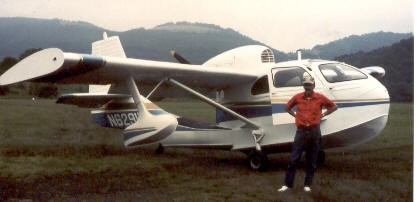
Joe Long in front of his Seabee.
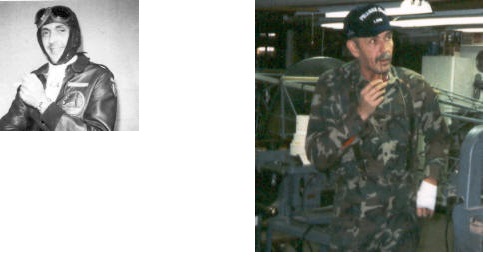
On the left is Joe Long in his military uniform, and on the right, Joe in later life.

Captain Tim Long at the controls of the K-S Lear Jet. On the right are Tim Long and his father, Dave Long, standing under a Boeing 707.
The Kelly Springfield Flight Operations hired Tim as a Captain pilot in 1983 and realized that he had the background and experience that they needed. Tim was extremely pleased that their aircraft were exceptionally well maintained, with modern up-to-date equipment. But most of all he was elated that he received periodic annual upgrades and that he literally did not have to fight for his salary when due. As a bonus the other Kelly Springfield crew members could enjoy Tim’s recollections of his previous varied and unique experiences. The Long Boys will be long remembered.
* * * * *
 Wings Over Cumberland